Ensuring that your vehicle and its components are performing at its best is important. While checking the engine, the oil, and the transmission are important, you also need to check your tires. Your tires are one of the most important components to your vehicle, and any issues with them will be noticeable during your trips around the St. Charles, St. Louis, and O'Fallon area.
To help you understand more about your tires, we're going to go over the right tire pressure, what happens when your pressure is off, and the right tire pressure for your Hyundai. By reading our guide, you'll see the importance of having the right tire pressure.
The recommended tire pressure for most Hyundai vehicles typically falls between 33 and 35 PSI (pounds per square inch). However, the exact specification can vary depending on the model and year. It's essential to consult your vehicle's owner's manual or the tire information placard located on the driver's side door jamb for the precise recommendation
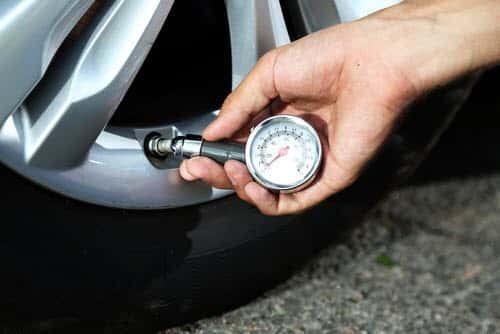 There's nothing better than driving around on tires that have the perfect amount of pressure
in
them. You'll notice this by how well your vehicle handles on the road. When you have the appropriate PSI (pounds per
square inch), not only will your tires have better traction, they'll also help you get the most out of your fuel.
There's nothing better than driving around on tires that have the perfect amount of pressure
in
them. You'll notice this by how well your vehicle handles on the road. When you have the appropriate PSI (pounds per
square inch), not only will your tires have better traction, they'll also help you get the most out of your fuel.
It's important to note that temperature can have a huge effect on your tires. Colder weather can actually lower the pressure of your tires because the warm air inside your tires will contract. This is why you should keep an eye on your tire pressure when the seasons change. Here's a list of the recommended Hyundai tire pressure by model:
It's always important to make sure that your tire pressure is at the appropriate level. If it isn't, there are a variety of situations that can occur when driving on under or overinflated tires. If your tire pressure is low, then too much of your tire touches the ground. This could cause your tires to overheat and wear down earlier than usual. Over time, your tread will separate, making it increasingly difficult for your tires to properly grip the road.
High tire pressure isn't good either. When your tires are overinflated, not enough of your tire touches the ground. This can result in bouncing and rough driving, even on smooth terrain. After a while, this will have a negative effect on your traction, and even your braking.
There are several factors can cause fluctuations in your Hyundai's tire pressure. Monitoring these can help ensure safety, performance, and tire longevity. These factors include:
Most Hyundai models range in tire pressure from 33 PSI to 35 PSI. Your best bet is to check your owner's manual to ensure that your tires are at the right pressure. Luckily, each Hyundai is equipped with a Tire Pressure Monitoring System. This feature will notify you when your tires are underinflated, so you can take the measures to get your tires back to the right pressure so you can enjoy a smooth and efficient ride.
If you have any more questions about the proper tire pressure for your Hyundai, you can always contact us at St. Charles Hyundai. We're always happy to help drivers in the St. Charles, St. Louis, and O'Fallon area with their automotive needs.

